


MOST POPULAR ARTICLES
- Sep 05, 2025Top 10 Mast Climbing Work Platform Maintenance HacksActionable, decision-focused maintenance guide delivering top 10 hacks for Mast Climbing Work Platform reliability, compliance and cost control, with technical guidance, standards references and a real-world case that highlights the benefits of proactive care.
- Sep 04, 2025How to install a suspended platform: 7-step safety checklistA practical, industry-focused guide that explains how to install a suspended platform with a 7-step safety checklist, standards references, procurement considerations, integration of accessories like
- Sep 03, 2025Construction hoist cost breakdown: save 20% on projects?A marketing and technical guide for project decision makers and procurement teams detailing the Construction hoist cost breakdown, savings tactics, standards, and product fit including Suspended Platforms.
Behind the modern city skyline, suspended access platforms (SAPs) are the unsung heroes enabling the construction of magnificent glass curtain walls and complex facades. They have evolved from an auxiliary device into an indispensable key technology in the construction of high-rise and super-high-rise buildings, playing multiple core roles in improving efficiency, safety, and cost-effectiveness.
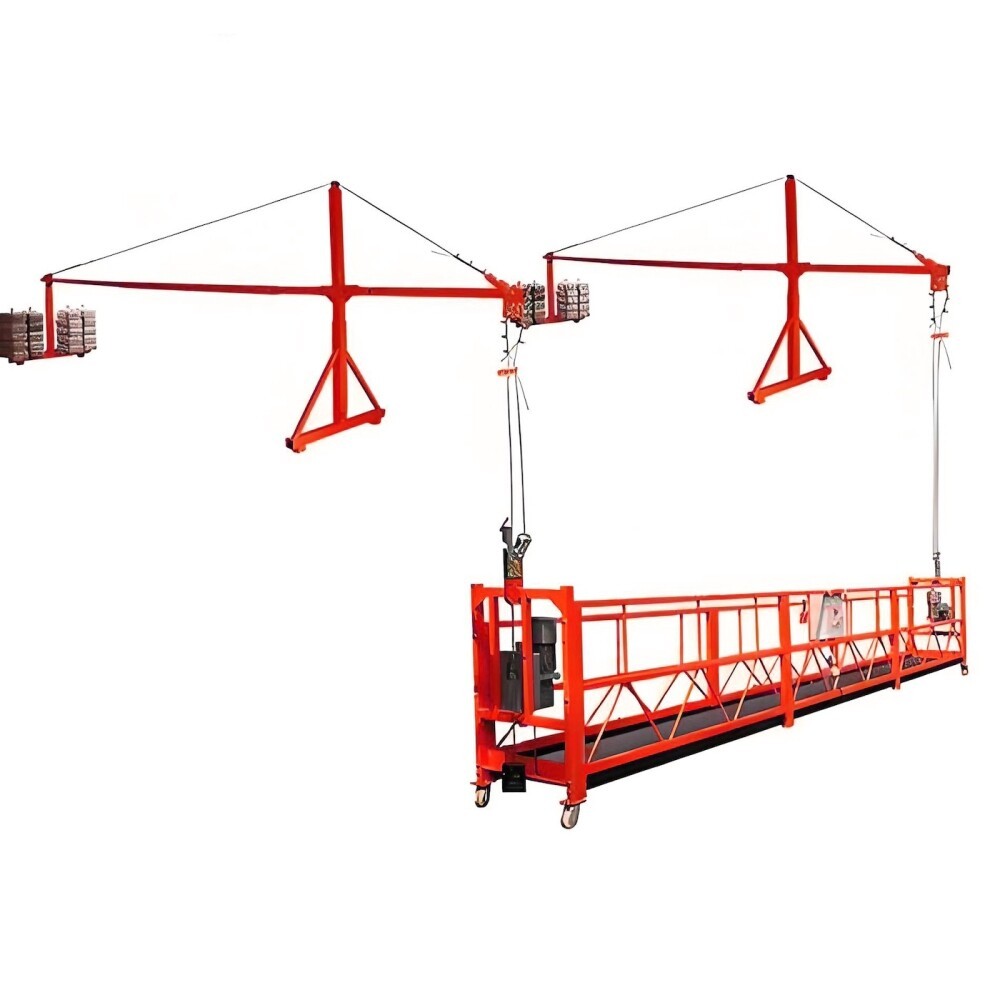
1. A "Versatile Work Platform" for High-Aerial Work
The most direct role of a suspended access platform is providing a mobile aerial work platform. Compared to traditional scaffolding, its advantages are revolutionary:
Ultimate Flexibility: The suspended access platform can be raised and lowered vertically along the building facade and moved horizontally within a limited range, enabling workers to reach any work point precisely and quickly, eliminating the need for repeated scaffolding setup and dismantling. This significantly improves construction efficiency and is particularly suitable for projects with tight deadlines.
Comprehensive Coverage: Whether it's a flat curtain wall, a concave or convex structure, or a unique architectural form, the suspended access platform provides comprehensive access to the work surface. This is crucial for the complex and ever-changing facade designs of modern buildings.
Multifunctional Integrated Platform: More than just a manned platform, it functions as a mobile "workstation." It conveniently transports tools, materials, and equipment (such as gluers, welders, and cleaning tools), ensuring workers have everything they need within easy reach, reducing the number of steps and time required to transport materials vertically.
II. The "Core Guarantee" of Safe Production
Safety is the lifeline of the construction industry, and suspended platforms contribute significantly to this endeavor.
Built-in Safety Design: Modern suspended platform systems incorporate multiple safety features, such as anti-fall locks, speed limiters, travel limiters, emergency stop buttons, and overload protectors. These devices collectively form a passive safety system that effectively prevents accidents such as falls, overspeeding, and overlifting.
Stability and Reliability: Suspended platforms are securely attached to the building structure via a roof-mounted suspension mechanism. Compared to scaffolding, they offer greater overall stability, providing workers with a more stable and reliable working environment and alleviating the psychological stress of working at height.
Standardized Workspace: The platform guardrails and toeboards provide workers with a clearly defined, protected, and enclosed work area, further reducing the risk of falls for both personnel and equipment.
III. Key Drivers of Economic Benefits
Over the entire project lifecycle, the use of suspended platforms offers significant economic benefits:
Cost and Time Savings: While initial rental and installation costs may be higher, their efficient operation significantly shortens the construction period for exterior wall projects. This time savings translates directly into reduced labor, equipment rental, and management costs.
Lower Overall Costs: Unlike scaffolding, which requires extensive floor space and materials, suspended platforms minimize disruption to other construction activities. Installation and removal require significantly less time and labor than large-scale scaffolding.
Improving Building Quality: Providing a stable, easy-to-use work surface, suspended platforms enable workers to achieve higher precision and quality during curtain wall installation, gluing, painting, and cleaning processes, reducing the risk of rework and indirectly ensuring the overall quality and economic benefits of the project.
Application Scenarios and Summary
Suspended gondolas are widely used in various applications, including glass curtain wall installation, exterior wall insulation construction, stone/aluminum panel hanging, exterior wall cleaning, maintenance and repair, and spray painting.


Online Consultation