


MOST POPULAR ARTICLES
- Sep 05, 2025Top 10 Mast Climbing Work Platform Maintenance HacksActionable, decision-focused maintenance guide delivering top 10 hacks for Mast Climbing Work Platform reliability, compliance and cost control, with technical guidance, standards references and a real-world case that highlights the benefits of proactive care.
- Sep 04, 2025How to install a suspended platform: 7-step safety checklistA practical, industry-focused guide that explains how to install a suspended platform with a 7-step safety checklist, standards references, procurement considerations, integration of accessories like
- Sep 03, 2025Construction hoist cost breakdown: save 20% on projects?A marketing and technical guide for project decision makers and procurement teams detailing the Construction hoist cost breakdown, savings tactics, standards, and product fit including Suspended Platforms.
Introduction: Why Mast Climbing Work Platform Maintenance Matters
Maintaining a Mast Climbing Work Platform starts with understanding the operational, safety and financial implications of neglect. Regular maintenance reduces unplanned outages and safety incidents, extends component life, and supports compliance with standards such as EN 1495, ISO 9001 processes and relevant regional regulations. This document presents targeted, high-impact maintenance hacks aimed at owners of Mast Climbing Work Platform equipment, including those evaluating platforms for high-rise buildings, bridge construction and industrial sites. Use these hacks to create a robust preventive maintenance program that improves mean time between failures (MTBF) and optimizes total cost of ownership.
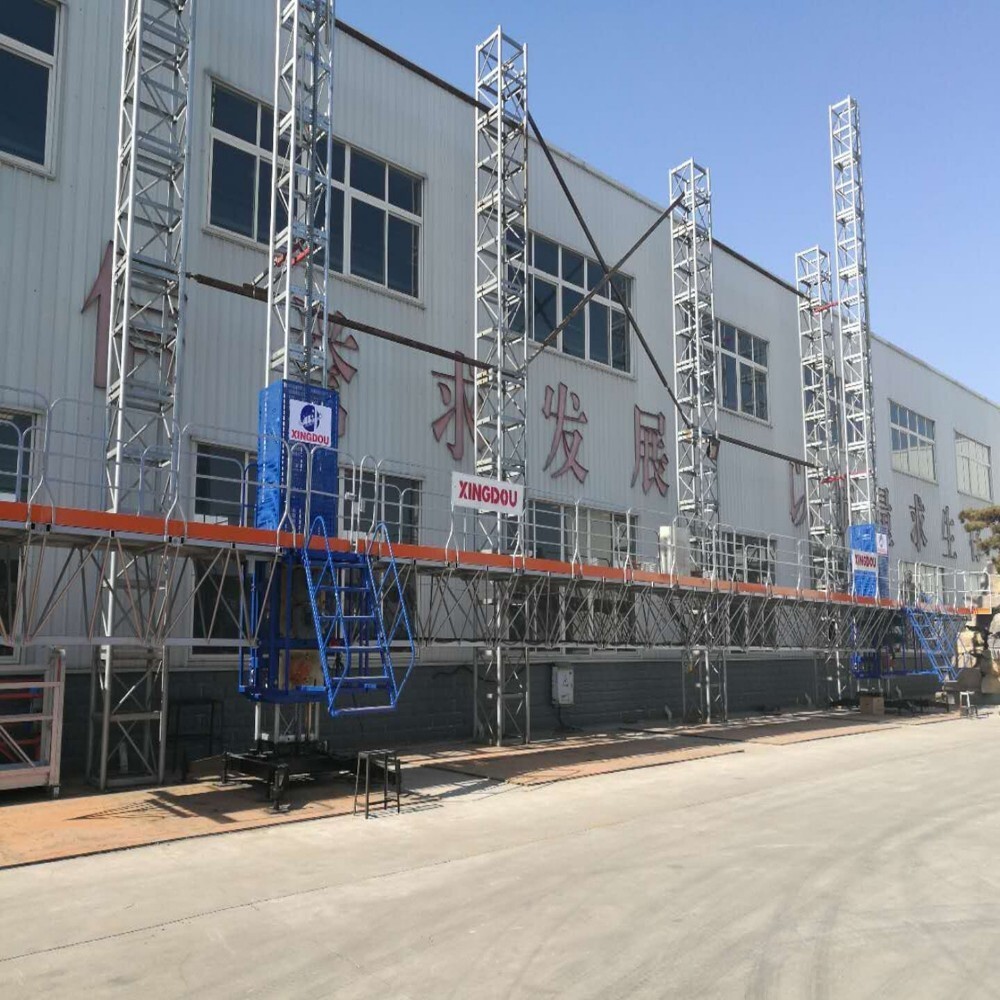
Definition and Core Components of a Mast Climbing Work Platform
A Mast Climbing Work Platform (commonly referred to as MCWP) is a type of vertical access and lifting system designed to transport personnel and materials along a guided mast or tower. Core components include the mast sections, climbing gearbox, drive unit, platform cages, fall arrest systems, overload protection, electrical control systems, and anchorage. Familiarity with each component helps prioritize maintenance tasks. The drive unit and gearbox are mechanical heart elements; electrical controls, variable frequency drives (VFDs), and safety devices determine operational reliability. For example, modern units may use VFD ranges such as 30 VFD to 110 VFD to enable smooth acceleration and automatic leveling functions. When evaluating or maintaining an MCWP, keep a clear asset map of components, serial numbers and service histories to support data-driven maintenance decisions.
Application Scenarios and Environmental Considerations
Mast Climbing Work Platform deployments span high-rise facades, bridge construction, chimneys and offshore bridge projects. Environmental factors—salt air for marine-adjacent sites, dust and heavy particulate for mining or chemical plants, or extreme cold for some climates—change maintenance priorities. Corrosion control, frequent lubrication schedules and electrical enclosure protection ratings (IP standards) become more critical in harsh environments. Adapting maintenance frequency based on environmental risk reduces component degradation. For instance, platforms used in coastal bridge construction require more frequent mast inspection and galvanic protection checks than those in temperate urban settings.
Technical Performance and Specifications: What to Track
To optimize the maintenance program, track performance metrics and critical specifications of your Mast Climbing Work Platform. Key parameters include load capacity, travel speed, maximum working height, motor and drive ratings, and safety devices. For many projects, models like the M450 provide a balance of high efficiency and safety features. Typical technical parameters to record and monitor include load ranges (for some platforms from 600 to 2,000 kg), maximum speeds (for some drives 30-54 m/min), and maximum permitted height (some systems reach 150 m). Drive and motor units can vary; a platform may use drive configurations such as 2*11/50 to 3*32/87 KW/Hz. Safety devices may be listed as SAJ30-1.2 to SAJ50-2.0, and electrical control ranges like 30 VFD to 110 VFD are common. Recording these values and monitoring actual performance versus design specifications reveals wear patterns early.
Top 10 Maintenance Hacks Overview
Below are ten maintenance hacks organized to be practical and measurable. Use this as a checklist for your preventive maintenance program. Each hack targets a common failure mode or an often-overlooked improvement area to increase safety and uptime for your Mast Climbing Work Platform.
- Structured Daily Startup Checks — a concise checklist performed by operators before each shift.
- Predictive Lubrication Strategy — use condition-based lubrication rather than fixed intervals.
- Drive and VFD Diagnostics — capture error codes and performance trends digitally.
- Mast and Rack Alignment Audits — measure tolerances and correct misalignment early.
- Fall Arrest and Overload Device Calibration — frequent verification against standards.
- Spare Parts Kit Optimization — stock parts based on failure mode analysis and MTTR goals.
- Training and Competency Logs — verify operator and service technician competencies periodically.
- Environmental Protection Upgrades — add coatings or enclosures for corrosive environments.
- Automated Service Reminders — integrate telemetry or simple digital logs.
- Lifecycle Replacement Planning — schedule major overhauls using ROI models.
Hack 1: Structured Daily Startup Checks
Make a concise daily checklist mandatory for every shift to detect small issues before they become incidents. Include visual mast inspection, audible unusual noise check, emergency stop function verification, fall arrest indicator status, and platform leveling response. Record each check in a digital or paper log and escalate any anomalies immediately. This simple habit frequently catches loose fasteners, minor electrical faults, and incorrect rigging that could otherwise lead to a safety shutdown. Emphasize that the platform must not operate if any critical safety indicator fails. Use this startup ritual to strengthen operator accountability and enable trend analysis of recurring minor defects.
Hack 2: Predictive Lubrication and Wear Monitoring
Switch from calendar-based lubrication to condition-based lubrication where feasible. Monitor bearing temperatures, gearbox oil viscosity, and gear backlash to determine lubrication needs. Use simple sensors or thermal cameras for periodic scans to identify hotspots before catastrophic failure. For masts and rails, apply corrosion inhibitors and verify grease compatibility with seals. Predictive lubrication reduces waste and prevents overgreasing, which can attract contaminants and accelerate wear. Implementing this hack extends the life of gearbox and drive bearings and reduces unplanned maintenance windows.
Hack 3: Drive, Motor and VFD Diagnostics
Modern Mast Climbing Work Platform control systems often include variable frequency drives and programmable logic controllers. Track error codes, runtime hours and torque curves. Capture logs from VFDs and motors to detect overheating, imbalanced currents, or repeated fault codes. Use these logs to predict component end-of-life and plan service windows rather than reacting to faults. For platforms with configurable electrical control ranges such as 30 VFD to 110 VFD, keeping firmware and parameter files documented makes troubleshooting faster. Proactively update VFD firmware and maintain manufacturer-recommended parameter sets to preserve smooth acceleration, automatic leveling and safe deceleration behavior.
Hack 4: Mast, Rack and Alignment Audits
Misalignment of mast sections or rack systems is a foundational cause of wear and binding. Schedule alignment audits that measure runout, perpendicularity and rack tooth engagement. Simple laser alignment tools reduce measurement time and increase accuracy. Tighten anchor points and replace worn mast sections before they propagate misalignment. Platforms used in heavy-duty or lateral-load conditions need more frequent audits. Addressing alignment early reduces gearbox stress, extends rack life and lowers energy consumption during lifts.
Hack 5: Safety Device Calibration and Certification
Safety devices—overload sensors, fall arresters and mechanical brakes—require routine calibration and testing. Maintain calibration records and ensure devices meet the manufacturer and regulatory tolerances, such as those implied by common safety device ranges like SAJ30-1.2 to SAJ50-2.0. Certify devices after any major repair or incident. Keep spares for safety-critical components to minimize downtime. Calibration is not just compliance; it directly prevents accidents and liability exposure. For enterprise buyers, tie calibration cycles into procurement and O&M budgets to ensure continuous compliance.
Hack 6: Spare Parts Strategy and Inventory Optimization
Develop a spare parts strategy driven by failure modes, lead times and criticality. Maintain inventory for high-failure, long-lead components such as specific gearbox assemblies, drive motors and unique electrical boards. Use a classification system: critical (on-site), important (within 48 hours), and standard (procure as needed). For models with a broad list of specifications or modules, standardize on compatible modules where possible. A well-managed spare parts kit shortens Mean Time To Repair (MTTR) and improves contract fulfillment rates. Combine parts tracking with maintenance logs to spot recurring part failures and consider redesign or vendor engagement where failure rates are high.
Hack 7: Operator and Technician Training, plus Competency Verification
Human error contributes significantly to equipment downtime. Implement regular training cycles, competency tests and service drills. Train operators on daily checks, emergency protocols, and basic troubleshooting. Train technicians on manufacturer-specific maintenance tasks, safety device calibration and VFD diagnostics. Keep records of certifications and retrain after any significant change in equipment or software. Strong training programs reduce improper use, which extends the life of mechanical and electrical components and improves site safety culture.
Hack 8: Environmental Protection and Corrosion Prevention
Assess environmental risks and upgrade protections accordingly. Use corrosion-resistant coatings for mast segments in coastal or chemical plant environments. Where dust ingress is a risk, improve sealing on electrical enclosures and implement regular filter replacement schedules. Add sacrificial anodes or galvanic protection for marine-adjacent projects. Environment-specific upgrades are preventive investments that reduce unscheduled maintenance and extend component life. For many high-rise and bridge projects, investing in protective measures reduces long-term total cost of ownership and supports predictable maintenance cycles.
Hack 9: Telemetry, Automated Service Reminders and Data Logging
Implement simple telemetry or digital logs to automate service reminders and capture usage metrics. Even low-bandwidth telemetry that records runtime hours, fault codes, and basic environmental inputs provides value. Correlate runtime and fault patterns with maintenance actions to refine intervals. Use automated reminders for calibration cycles, lubrication, and alignment audits. Data-driven scheduling reduces unnecessary service while ensuring critical maintenance happens on time. For procurement managers, telemetry evidence supports performance-based contracts and more accurate lifecycle cost forecasting.
Hack 10: Lifecycle and Replacement Planning with ROI Focus
Apply a lifecycle cost model to decide when to refurbish versus replace. Consider direct maintenance costs, downtime impacts on project schedules, safety risk exposure, and residual asset value. Use standard replacement metrics—such as when annual maintenance exceeds a set percentage of replacement cost—to trigger major overhauls. For platforms used in multiple projects or harsh environments, plan for mid-life major service at predictable milestones. Clear replacement triggers prevent escalating maintenance spend and ensure fleet reliability for enterprise operations.
Standards, Compliance and Certification Guidance
Compliance with international and regional standards helps ensure safe operation and reduces legal risk. Reference standards like EN 1495 for suspended platforms where applicable, ISO 9001 for supplier quality systems, and local construction safety regulations. Maintain certificates and calibration records in a centralized system. When procuring replacements or upgrades, prefer suppliers with third-party certifications such as CE, TUV or COC and documented export experience. Certification evidence often correlates with better technical documentation and available spare parts support.
Procurement and Technical Evaluation Checklist
- Verify load and speed specs match project requirements.
- Confirm compatibility of control systems and spare parts lists.
- Review supplier certifications and after-sales support SLA.
- Check environmental protection options and optional kits.
- Request lifecycle cost estimates and recommended maintenance schedules.
When selecting new units, compare not only purchase price but also energy efficiency, dual-use capabilities (passenger and cargo), and intelligent operation features. For example, some modern models support passenger and cargo transportation with automatic leveling and floor call functions, improving on-site productivity and reducing manual adjustments.
Product Integration Example
When considering a platform with a proven track record, look at units that combine safety, efficiency and intelligent controls. A representative example is the M450, which balances high efficiency, dual-use passenger and cargo capability, and safety features such as overload protection and fall arresters. The M450 suits high-rise buildings, bridge and chimney construction, and both new construction and refurbishment projects. Integrating such a platform into a maintenance program benefits from clear technical parameters like load capacity ranges and drive unit options that inform spare parts and service needs.
Customer Case Study: Maintenance Program Impact
A mid-size contractor operating in South America implemented the Top 10 maintenance hacks across a fleet of Mast Climbing Work Platform units during a 24-month project. They standardized daily startup checks, introduced predictive lubrication and deployed basic telemetry. As a result, unscheduled downtime decreased by 46%, average repair time dropped by 35%, and safety-related stoppages were reduced by 60%. The contractor reinvested the savings into spare parts stock for critical drive components and negotiated better service terms with their supplier. This case illustrates how disciplined maintenance practices yield measurable operational and financial gains.
Common Misconceptions and Pitfalls
Many organizations assume that reactive maintenance is cheaper because it defers upfront service costs. In reality, reactive approaches increase downtime and project delay exposure. Another pitfall is ignoring environmental stressors—standard maintenance intervals that suffice in benign climates can fail under corrosive conditions. Finally, underestimating the importance of documented competencies for operators and technicians leads to inconsistent practices and increased incidents. Address these misconceptions by quantifying downtime costs and linking maintenance actions to schedule reliability and safety outcomes.
FAQ: Practical Answers for Decision-Makers
- How often should I calibrate safety devices? Calibrate per manufacturer guidance and after any incident; most critical devices require calibration at least annually, but high-use sites may need semi-annual checks.
- What are quick wins to reduce downtime? Enforce daily startup checks, keep critical spares on-site, and implement basic telemetry for fault capture.
- How to choose between refurbishment and replacement? Use lifecycle cost thresholds: if annual maintenance exceeds a given percentage of replacement cost and reliability is still poor, replacement yields better ROI.
Trends and Future-Proofing Your Maintenance Program
Trends include increased telemetry adoption, predictive analytics for failure forecasting, and modular component designs that reduce repair time. Future-proof your maintenance program by specifying telematics-ready platforms, standardizing on widely supported modules, and insisting on clear spare parts obsolescence policies from suppliers. Equipment that supports intelligent operation—automatic leveling and floor call features—reduces operator error and simplifies commissioning across sites.
Conclusion and Call to Action
Effective maintenance of a Mast Climbing Work Platform requires disciplined daily practices, condition-based interventions and strategic lifecycle planning. Applying the Top 10 hacks improves safety, reduces downtime and delivers measurable cost benefits. For enterprise buyers and technical evaluators, prioritize platforms that offer documented technical parameters, intelligent control features and strong supplier certifications. If you want to explore a high-efficiency, safety-focused option for your projects, consider platforms that combine passenger and cargo capability and intelligent operation, such as the M450. Contact us to discuss how to implement a maintenance program that lowers risk and maximizes return on your Mast Climbing Work Platform assets.
Maintaining your Mast Climbing Work Platform proactively secures uptime, enhances safety and optimizes total cost of ownership—start applying these hacks today to see immediate improvements.


Online Consultation