


MOST POPULAR ARTICLES
- Sep 05, 2025Top 10 Mast Climbing Work Platform Maintenance HacksActionable, decision-focused maintenance guide delivering top 10 hacks for Mast Climbing Work Platform reliability, compliance and cost control, with technical guidance, standards references and a real-world case that highlights the benefits of proactive care.
- Sep 04, 2025How to install a suspended platform: 7-step safety checklistA practical, industry-focused guide that explains how to install a suspended platform with a 7-step safety checklist, standards references, procurement considerations, integration of accessories like
- Sep 03, 2025Construction hoist cost breakdown: save 20% on projects?A marketing and technical guide for project decision makers and procurement teams detailing the Construction hoist cost breakdown, savings tactics, standards, and product fit including Suspended Platforms.
Construction hoists are essential vertical transportation equipment on construction sites. Their operational safety is directly related to the safety of workers and the smooth progress of the project. Before each operation, operators must conduct a rigorous and comprehensive safety inspection, never a mere formality. The following is a detailed pre-operation checklist to ensure the hoist is in absolutely safe operating condition.
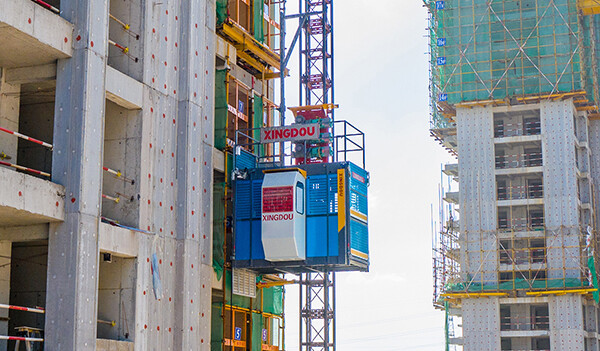
1. Exterior and Foundation Inspection
Before entering the operating platform, first conduct a visual inspection of the hoist's surroundings and foundation structure.
Environment: Check that the hoistway and ground-level entrance area are clean and free of obstructions. Ensure there is no accumulation of materials, tools, or debris to prevent tripping hazards or impediments to hoist operation. Also, check for any cross-operation overhead to prevent falling objects.
Foundation and Enclosure: Check the ground foundation for uneven settlement and cracking. Verify that all landing doors (landing doors) are intact, closed, and locked. This is the first line of defense against people or materials falling from the floor openings.
Structural Connections: Visually inspect the standard section (tower) for complete bolting and signs of looseness. Observe the guide rails for any obvious deformation or damage.
II. Mechanical and Structural System Inspection
This is the core of the inspection and is crucial for the stable operation of the equipment.
Wire Rope and Pulleys: Carefully inspect the wire ropes of the hoist cage. Pay particular attention to defects such as broken wires, kinks, flattening, rust, or excessive wear. Ensure that all pulleys rotate freely and are free of cracks or damage.
Transmission System: Listen and observe the gears, racks, and meshing conditions. The gears and racks should be well lubricated, with normal meshing clearance and no unusual noise. Inspect the gearbox for oil leaks.
Safety Devices: Manually test the emergency stop button to ensure it is functioning effectively. This is a critical safeguard in an emergency.
Cage and Guardrails: Inspect the cage structure for any deformation or damage. Verify that the interlocking devices on the entrance and exit guard doors (cage doors) are functioning properly—that is, the hoist will only start when the cage doors are fully closed.
III. Electrical and Control System Testing
After turning on the power, a series of functional tests are required.
Limit Switches and Ultimate Limit Switches: This is one of the most important safety tests. A full test run should be conducted with the cage unloaded. Test the following:
Upper Limit Switch: When the cage reaches the highest landing, it should automatically shut off the ascending power, bringing the cage to a smooth stop.
Lower Limit Switch: When descending to the bottom landing, it should automatically shut off the descending power.
Upper and Lower Limit Switches: This is the last electrical line of defense. Attempt to force the cage past the limit switches. At this point, the limit switches must immediately shut off the main power supply, preventing the cage from further movement in the dangerous direction. This test is crucial!
Operation Panel: Check that all buttons, switches, indicators, and alarms are functioning properly. The display (if any) should clearly display information such as the current floor and load.
Communications System: Test the intercom or PA communication system between the cage and the ground control personnel to ensure unimpeded communication.
IV. Final Verification and Recording
After completing all checks, the operator should confirm that all items are normal. Always conduct a no-load test run, running the machine from the lowest to the highest level. Check for smooth starting and braking, and any abnormal vibration or noise.
Finally, the operator must accurately record the inspection results on the daily equipment inspection form. If any problems are found, the machine must be immediately discontinued and reported to the site supervisor. Operation can only be resumed after professional maintenance personnel have thoroughly corrected the problem and confirmed it is safe.


Online Consultation